Blog
·
30 September 2026
·
5 min read
If you drive the Klang Valley toll network, your commute is about to get a little quicker in a few more places. Touch 'n Go has announced 10 additional Enhanced RFID Toll lanes across five highways, unveiled at the MyASEAN Roads and Traffic Tech Expo (MyARTTE) 2026. All of them are due to go live by Q4 2026 — effectively right now, given the timing. The best part: it uses the same sticker you already have.
Where the 10 new lanes are
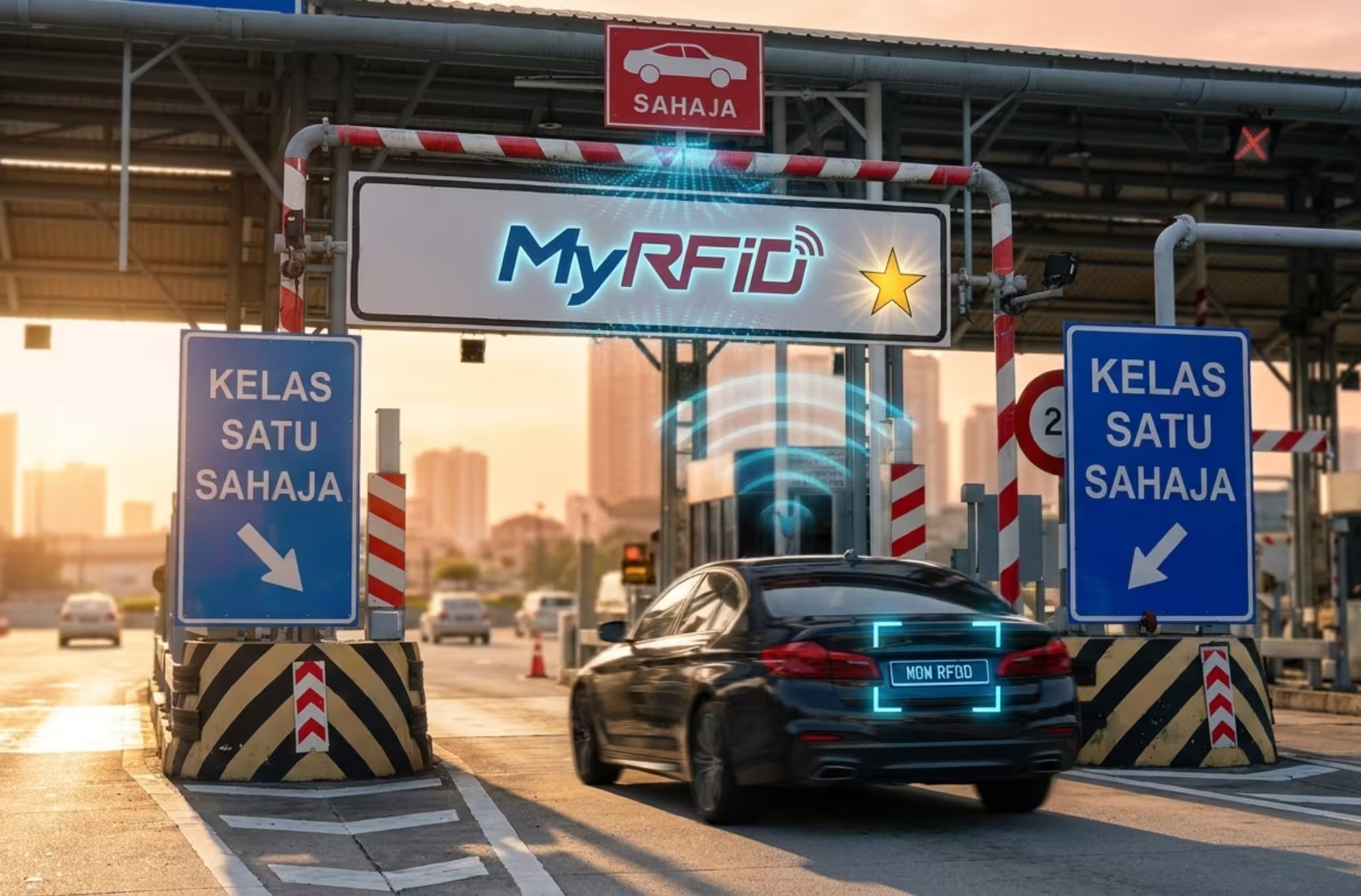
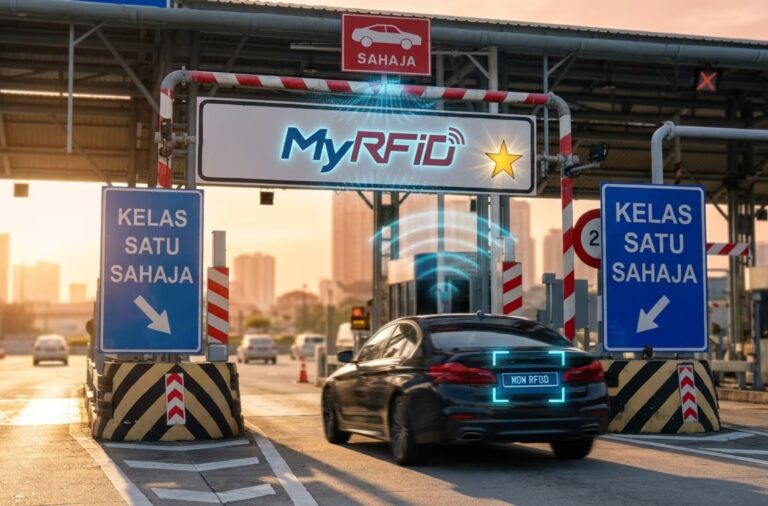
The rollout spreads across five highways, with some plazas getting a pair of upgraded lanes and others a single one. You'll know an Enhanced lane by the gold star on its overhead sign.
Touch 'n Go has also signalled that more locations are coming next year, so this is a phased expansion rather than the finish line.
What "Enhanced" actually means
A standard RFID lane simply reads your sticker as you roll through. An Enhanced RFID lane goes further by borrowing selected parts of Touch 'n Go's homegrown Titan Flow technology stack. In practice, the RFID read is paired with Automatic Number Plate Recognition (ANPR) and AI machine-learning systems working together.
The payoff is better vehicle detection and higher lane throughput — the system processes transactions reliably at higher speeds, which clears queues faster. On the hardware side, the lanes use a double-antenna setup with standardised placement, and Touch 'n Go is paying for the upgrades itself.
Enhanced RFID is not a new sticker
This is the point that trips people up. Enhanced RFID lanes read the exact same RFID tag you already have on your windscreen or headlamp. There is nothing new to buy, install or register. If you're already on RFID, you're ready for these lanes the day they switch on.
It's also not SmartTAG or a separate account — it's the same Touch 'n Go RFID system, just with smarter hardware in the lane itself.
The road to barrier-free tolls
This expansion is really a stepping stone. Touch 'n Go has been open about its roadmap toward Single-Lane Fast Flow (SLFF) and, eventually, Multi-Lane Fast Flow (MLFF) — the barrier-free model where you drive straight through with no boom gate at all.
Enhanced RFID lets the company deploy and stress-test the technologies needed for free-flow tolling under real traffic, weather and road conditions, while still operating inside the familiar toll-lane setup. It's a way to prove the tech before the barriers come down for good.
The groundwork has been building for a while. Touch 'n Go first ran a proof of concept on a gantry at Alam Impian along the Kemuning-Shah Alam Highway (LKSA), followed by a pilot on AKLEH, before arriving at this multi-highway rollout.
Spotting one: look for the gold star on the overhead lane sign. If you're on RFID, just pick that lane — you don't need to slow down and hunt for a card or reader. The read happens faster than a regular RFID lane, so keep a steady, gentle pace through the gantry.
Why it matters for Malaysian drivers
RFID adoption has grown steadily since the payment method launched here, and Touch 'n Go says more than 4.8 million motorists now use it for toll payment. For that base of users, Enhanced RFID lanes are a zero-effort upgrade: no new device, no change to how you pay, just a quicker read when you roll into a gold-star lane.
With Touch 'n Go marking its 30th anniversary this year, the direction is clear — the stop-free toll experience is moving from concept to something you'll start seeing on your regular routes.
Want the full background on how Enhanced RFID works and how it compares to plain RFID? Read our complete
Enhanced RFID Toll explainer.
Frequently Asked Questions
Do I need a new sticker for Enhanced RFID lanes?
No. Enhanced RFID lanes read the same Touch 'n Go RFID tag you already have. There's nothing new to buy or install — if you're on RFID, you can use these lanes as soon as they go live.
How do I know which lane is an Enhanced RFID lane?
Look for a gold star on the overhead lane sign. That marks an Enhanced RFID lane.
Which highways are getting the new Enhanced RFID lanes?
Five highways: SILK (Sungai Ramal), Grand Sepadu (Bukit Raja), GCE (Bukit Jelutong), EKVE (Sungai Long and Ampang) and MEX (Putrajaya). All are scheduled to be online by Q4 2026, with more locations planned for next year.
What's the difference between RFID and Enhanced RFID?
Regular RFID simply reads your tag. Enhanced RFID adds Automatic Number Plate Recognition (ANPR), AI machine learning and a double-antenna setup, so it detects vehicles more reliably and at higher speeds — clearing queues faster while using the same tag.
What are SLFF and MLFF?
Single-Lane Fast Flow (SLFF) and Multi-Lane Fast Flow (MLFF) are the next stages toward barrier-free tolling, where vehicles pass through without stopping at a boom gate. Enhanced RFID is a practical step toward that future.